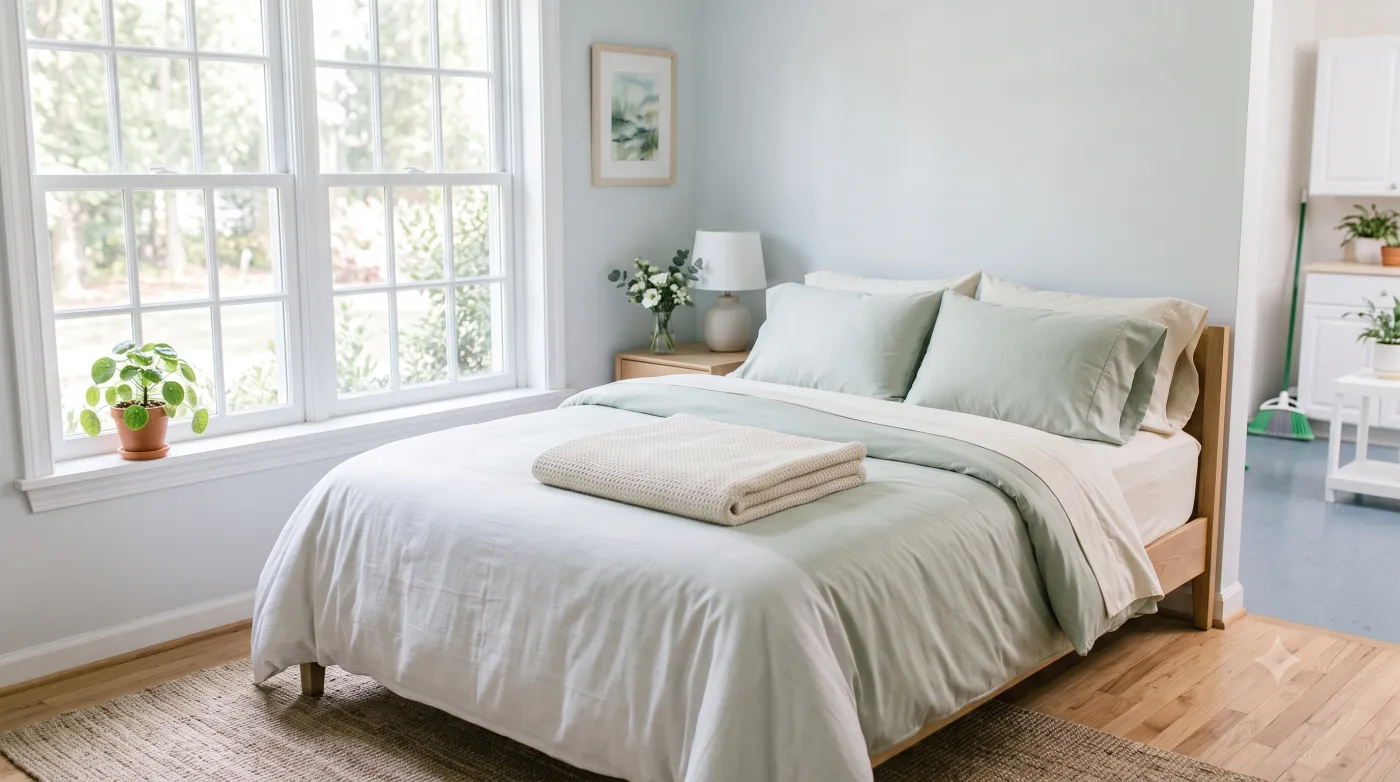
The best cooling sheets for night sweats and hot flashes
If you wake up damp and kick the covers off at 3am, your sheets are working against you. Here's what to sleep on instead.
8 minute read
Some links on this page are affiliate links. We earn a commission from qualifying purchases — it doesn't change our picks. We only point you to things we'd recommend to a friend.
The short version
- Top pick: the Eucalypso Classic Sheet Set — 100% TENCEL lyocell, the best moisture-moving fiber you can put on a bed, and it stays dry longer than cotton.
- The word "cooling" on a package means almost nothing. What actually keeps you cool is the fiber and the weave — breathable, moisture-wicking, not slick "cool-touch" coatings that wear off.
- Skip high thread counts and anything brushed or "silky." For night sweats you want airflow and something that pulls sweat off your skin, then dries fast.
Our top pick, in one line
If you buy one thing today, get the Eucalypso Classic Sheet Set. It's 100% TENCEL lyocell, which wicks moisture better than any natural fabric on this page and feels cool and smooth without a coating that washes away. When a night sweat hits, it moves the moisture off your skin and dries quickly, so you're far less likely to wake up clammy.
Why night sweats need different sheets
Here's the plain-English version. During perimenopause your body's thermostat gets twitchy. A hot flash at night — a night sweat — floods you with heat and sweat, then leaves you cold and wide awake.
Most sheets make this worse. Standard cotton-polyester blends and high-thread-count "luxury" sateens are dense and warm. They trap heat against you and then hold the sweat instead of moving it, so you go from hot to soaked to shivering. That whole cycle is what jolts you out of sleep.
The right sheets can't stop the flash itself — for that, read how to stop hot flashes. But breathable, moisture-wicking fabric lets heat escape and pulls sweat off your skin so it dries fast. That's often the difference between waking up fully and drifting back down. Pair good sheets with a cooling pillow and the rest of the fixes in night sweats and sleep.
How we chose these
We didn't get sent free sheets and we're not ranking by star count. These are researched picks organized by fabric, because fabric is what actually decides whether you sleep cool. Here's what we looked for:
- Fiber. Eucalyptus, bamboo, long-staple cotton, linen — natural, breathable fibers that don't trap heat the way polyester blends do.
- Weave. Percale (a crisp, open, plain weave) breathes far better than dense sateen. Weave matters as much as the fiber.
- Moisture-wicking. The real job of a night-sweat sheet is to move sweat off your skin and dry fast. We weighted this heavily.
- Breathability. Airflow beats any "cool-touch" finish. A fabric that lets heat pass through keeps working all night.
- Durability. Some cooling fabrics pill or go limp after a dozen washes. We flagged the fragile ones.
- Value. You don't need to spend $300 to sleep cool. There's a budget pick in here too.
One honest note: "cooling" is the most oversold word in the bedding aisle. A lot of "cooling sheets" are just polyester with a slick cool-touch coating that feels great for a week and then washes out — and polyester doesn't breathe, so it makes night sweats worse over a full night. We weighted our picks toward breathable natural fibers and open weaves, which is what actually lasts.
Quick comparison
| Sheet set | Fiber & weave | How it handles sweat | Feel | Queen price |
|---|---|---|---|---|
| Eucalypso ClassicOur pick | 100% TENCEL lyocell | Wicks hardest, dries fastest | Smooth, cool, slight drape | $$$ |
| Brooklinen Classic Percale | Long-staple cotton, percale weave | Breathes beautifully, wicks less | Crisp, matte, hotel-like | $$ |
| Quince European Linen | 100% European flax linen | Absorbs a lot before feeling wet | Textured, rumpled, relaxed | $$ |
| Cozy Earth Bamboo | Bamboo viscose | Wicks well, cuts humidity at the skin | Silky, drapey, soft | $$$$ |
| Slumber Cloud Stratus | Cotton with Outlast viscose | Wicks, plus banks and returns heat | Soft, mid-weight | $$$ |
Price bands are for a queen set at typical retail. Check current pricing before you buy — all five of these brands discount heavily and often, and the sale price is frequently the real price. As a rough anchor: Eucalypso lists the Classic at $200 and sells it near $139; Quince's European linen runs about $90 a queen, which undercuts nearly every other linen brand on the market.
The picks
1. Eucalypso Classic Sheet Set — best overall for night sweats
Best for: anyone who runs hot and sweats at night and wants the single most effective fabric.
Why it sleeps cool and dry: Eucalypso builds its Classic set from TENCEL lyocell, and lyocell is the best moisture-moving fiber you can put on a bed. It pulls sweat off your skin and then releases it fast, so the sheet doesn't stay damp against you during the clammy phase after a flash. It feels cool and smooth naturally — that's the fiber, not a coating that washes off after ten cycles.
The con: real TENCEL costs more than cotton — the Classic lists at $200 a queen, though it's usually on sale nearer $139. Note that Eucalypso also sells a cheaper "Sundaze" set that blends cotton with TENCEL; it's a different, less moisture-moving product. If you want the full effect, buy the Classic. And in general, plenty of cheap "eucalyptus" sets from other brands cut the lyocell with polyester — check the label says lyocell, not "eucalyptus blend."
2. Brooklinen Classic Percale — best crisp, breathable classic
Best for: people who love that cool, crisp hotel-sheet feel and want a natural, no-frills option.
Why it sleeps cool and dry: percale is a plain over-under weave, so it breathes far better than a dense sateen. Brooklinen's version is long-staple cotton and OEKO-TEX certified, meaning it's been independently tested for harmful substances. It's crisp and matte, lets body heat pass straight through, and gets softer with every wash instead of wearing out.
The con: cotton wicks less aggressively than lyocell, so a heavy sweat leaves it damp longer. If your flashes soak the bed, buy the Eucalypso. If you want this feel for less, Quince's Classic Organic Percale is the value version.
3. Quince European Linen — best natural airflow for the money
Best for: hot sleepers who like a relaxed, lived-in feel and want the most breathable natural fiber without paying premium-linen prices.
Why it sleeps cool and dry: linen's flax fibers are thick and hollow-feeling with a loose weave, so air moves through it better than almost any bedding. It also absorbs a fair amount of moisture before it starts to feel wet, then dries quickly — which is exactly the behavior you want when a flash passes. Quince sells European flax at roughly a third of what Brooklinen charges for its Washed Linen set, and it's the closest thing to Parachute quality at that price.
The con: linen is textured and wrinkly by design, and it takes several washes to soften up. If you want smooth and crisp on night one, buy percale instead.
4. Cozy Earth Bamboo — best soft, silky-feel option
Best for: sweaty sleepers who want something that feels soft and drapey rather than crisp, and don't mind paying for it.
Why it sleeps cool and dry: bamboo viscose draws heat away from your body and cuts the humidity right at your skin by wicking moisture off it. It feels cool the instant you get in, which genuinely helps you settle back down after a flash instead of lying there waiting.
The con: it's among the priciest sets here, and bamboo viscose is a little overhyped — it's good, but it doesn't beat lyocell at the thing you're actually buying it for. Cheaper viscose sets also go limp or pill after enough washes. Buy this one for the feel, not because it's the best performer.
5. Slumber Cloud Stratus — best for the hot-then-cold swing
Best for: people whose problem isn't only the sweat — it's the shivering ten minutes later.
Why it sleeps cool and dry: the Stratus blends cotton with Outlast viscose, a phase-change material originally developed for NASA. It absorbs your body heat as it spikes and gives it back as you cool, so the swing gets flattened from both ends. No other sheet on this list does anything about the cold half of the night.
The con: the phase-change material has a limit — on a night with repeated flashes it saturates and behaves like a normal cotton sheet. And if your nights are all heat with no chill, you're paying for a feature you won't use.
What the wrong sheets actually cost you
Sheets touch more of your skin than anything else in the bed, which is why getting them wrong does more damage than getting the blanket wrong. A dense high-thread-count sateen doesn't just feel warm — it holds sweat in place against you. That's what turns the ten minutes after a flash into the part that actually wakes you: you're not hot anymore, you're lying in a damp sheet that won't dry.
The fix is the cheapest intervention available. A queen percale set runs a fraction of what people spend on cooling mattress toppers chasing the same problem, and the fiber does more of the work than any gadget on top of it. If you only change one thing on your bed, change this.
Frequently asked questions
Bamboo vs eucalyptus vs percale — which is coolest?
For pure night-sweat performance, eucalyptus (TENCEL lyocell) wins — it wicks moisture the best and dries fastest. Bamboo viscose is a close, softer, silkier second. Cotton percale is the coolest feeling classic thanks to its crisp, open weave, but it wicks less than the other two, so it can stay damp longer after a heavy sweat. If you want soft and drapey, go bamboo; if you want crisp and breathable, go percale; if you want maximum stay-dry, go eucalyptus.
Does a high thread count mean cooler sheets?
No — that's the biggest myth in bedding. A higher thread count usually means a denser, tighter weave, which traps more heat, not less. For cooling you want a breathable fiber and an open weave (like percale), not a big number on the package. Anything from about 200 to 400 in a percale weave is the sweet spot. Once you're past ~400, you're often just paying for a warmer sheet.
How do I wash cooling sheets to keep them cool?
Wash in cold or warm water and skip fabric softener and dryer sheets — they leave a waxy coating that clogs the fibers and kills breathability and wicking. Line-dry or use low heat; high heat breaks down lyocell and bamboo over time. Washing regularly also matters because sweat and body oils build up and make any sheet feel warmer, so a clean set genuinely sleeps cooler. More on the whole setup in night sweats and sleep.
If night sweats keep soaking you awake, the fabric under you matters as much as anything else in the room. Start with the Eucalypso Classic for the best mix of breathable and stay-dry. If you'd rather have a crisp cotton feel, Brooklinen Classic Percale is the one — and Quince European Linen beats both on airflow if you don't mind wrinkles. Ignore the thread-count numbers and the word "cooling" on the package entirely. Then pair your sheets with a cooling pillow, work on the flashes themselves in how to stop hot flashes, and fix the rest of your sleep setup with night sweats and sleep.