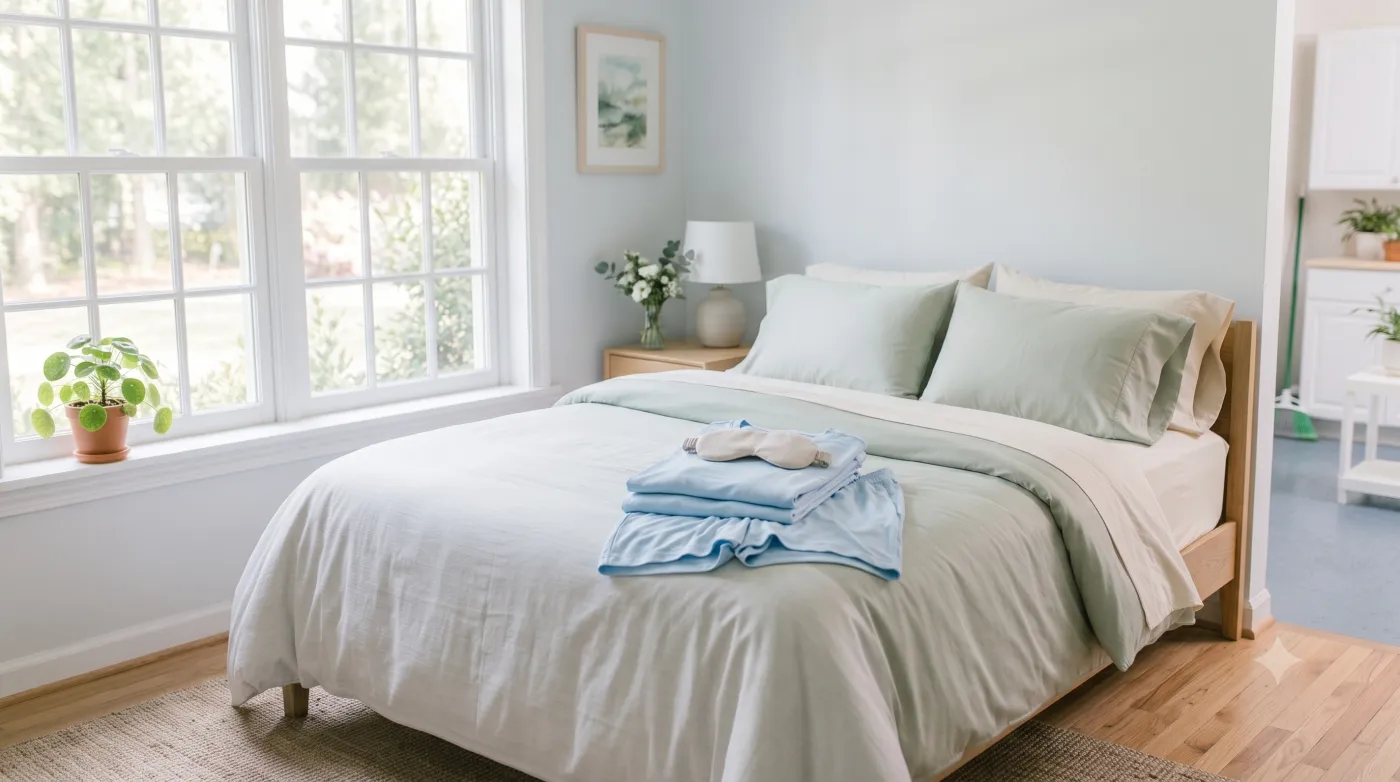
The best moisture-wicking pajamas for menopause night sweats
If you wake up in a soaked cotton nightshirt, the fabric is working against you. Here's the sleepwear built to pull sweat off your skin and keep you dry.
8 minute read
Some links on this page are affiliate links. We earn a commission from qualifying purchases — it doesn't change our picks. We only point you to things we'd recommend to a friend.
The short version
- Top pick: the Cool-jams NightCool Pajama Set — engineered to pull sweat away and dry fast, so a night sweat doesn't leave you lying in a wet shirt.
- Fabric is the whole game. Engineered wicking fabric beats cotton, which soaks up sweat and holds it against your skin all night.
- Know which camp you need: wicking fabrics move sweat out, natural fibers absorb it. Heavy sweats need wicking. Mild flashes can go with bamboo or modal.
Our top pick, in one line
If you buy one thing today, get a Cool-jams NightCool Pajama Set. It's built for exactly this problem — the NightCool fabric moves sweat to the surface and dries fast instead of soaking it up, so when a night sweat hits you don't spend the next hour in a wet, cold shirt. Cool-jams sells the NightCool line in a range of cuts (long sleeve, scoop neck, capri, shorts) at the same price, so pick the one you'd actually wear. It's the difference between a bad hour and a ruined night.
Why sleepwear fabric matters for night sweats
Here's the plain-English version. During perimenopause your body's thermostat gets twitchy. A hot flash at night — a night sweat — floods you with heat and sweat, then leaves you cold and wide awake.
What you're wearing decides how bad that gets. Cotton feels soft and natural, so most of us reach for it. But cotton is a sponge: it soaks up sweat and holds it right against your skin. Once it's wet, it stays wet, and now you're cold and clammy on top of everything else. That wet-then-freezing swing is often what wakes you all the way up.
Moisture-wicking fabric does the opposite. It's designed to pull moisture away from your skin and spread it across the surface so it evaporates fast. Add breathability — fabric that lets heat and air move through — and you get the thing cotton can't do: it dries while you're still wearing it. You still have the flash, but you're not marinating in it afterward.
A good pajama won't stop a hot flash — for that, read how to stop hot flashes. But it changes how the night goes after the flash hits, which is where most of the lost sleep actually happens. Pair it with the fixes in night sweats and sleep.
How we chose these
We didn't get sent free pajamas and we're not ranking by star count. These are researched picks based on what genuinely keeps a hot, sweaty sleeper dry. Here's what we looked for:
- Wicking, not absorbing. The whole point is fabric that moves sweat away from your skin instead of soaking it up and holding it there.
- Breathability. Airflow lets heat escape and helps sweat evaporate. A wicking fabric that doesn't breathe still feels stuffy.
- Dries fast. The real test of a night-sweat pajama is how quickly it's dry again after a flash. Fast-drying fabric is what lets you fall back asleep.
- Feels good on skin. No point being dry if the fabric is scratchy or clingy. We favored soft, smooth fabrics you'd actually want to sleep in.
- Value. Specialty sleepwear costs more. We flagged cheaper fabrics that get you most of the way there.
One honest note: "cooling" and "wicking" get slapped on a lot of sleepwear that's really just thin. Thin helps, but what lasts through a full night sweat is a fabric actually engineered to move moisture — bamboo viscose, modal, TENCEL, or a true performance blend. We weighted our picks toward that.
The one distinction that decides this
Every set below falls into one of two camps, and picking the wrong camp is why so many women buy "cooling pajamas" that don't help.
Engineered wicking fabrics (Cool-jams, Lusomé, Dagsmejan) are built like athletic gear. They don't absorb sweat — they move it to the outside of the fabric and let it evaporate. That means they dry fast, which is what saves you on a heavy night.
Natural breathable fibers (bamboo viscose, modal, TENCEL) do the opposite. They're highly breathable and feel wonderful, but they absorb moisture. Great for a mild flash. On a soaking night they hold the damp against you, and that's the part that wakes you.
So the question isn't "what feels nicest." It's how heavy your sweats actually are.
| Set | Camp | Fabric | Dry speed | Best for |
|---|---|---|---|---|
| Cool-jams NightCool SetOur pick | Engineered | NightCool performance fabric | Fastest — brand claims 4× cotton | Sweats that soak through |
| Lusomé Eva Sleepshirt | Engineered | XIROTEX dual-layer | Very fast | One loose layer, nothing at the waist |
| Dagsmejan Stay Cool | Engineered | Performance sleep knit | Very fast | Wanting tech fabric that looks like sleepwear |
| Cozy Earth Bamboo Set | Natural | Bamboo viscose | Moderate | Mild flashes, maximum softness |
| Eberjey Gisele TENCEL Modal | Natural | TENCEL Modal | Moderate | Wanting to look good and still breathe |
Dry-speed claims come from the brands, not from independent lab testing — treat the direction as reliable and the exact multiple as marketing. The camp a fabric belongs to is the part that actually predicts how your night goes.
The picks
1. Cool-jams NightCool Pajama Set — best overall
Best for: anyone whose night sweats regularly soak through and wake them up.
Why it stays dry: this is sleepwear built for one job. The NightCool fabric is engineered to move sweat to the surface and dry — Cool-jams puts it at four times faster than cotton — and the sets are cut loose so air moves underneath. Sleep physician Michael Breus has endorsed the brand (the recommendation appears on Cool-jams' own site, so treat it as a brand partnership rather than an independent review). The line comes in scoop neck, V-neck, long sleeve and 3/4 sleeve tops paired with shorts, capris or full pants, all at one price, so you can pick for how cold your room gets between flashes.
The con: at $120 a set it costs several times a basic cotton pair, and the styling is practical rather than pretty. You're paying for performance, not fashion.
2. Lusomé Eva Sleepshirt — best single layer
Best for: anyone who overheats in a two-piece set and just wants one loose, breezy layer with nothing bunching at the waist.
Why it stays dry: Lusomé's XIROTEX is a moisture-management fabric that pulls heat and sweat off your skin and spreads them to evaporate — the company claims it dries in under ten seconds and describes the technology as clinically proven. A single loose sleepshirt also means less fabric touching you and more air moving underneath, which for a lot of women is the coolest setup there is regardless of fabric.
The con: $88 for one piece, and a sleepshirt can ride up or twist when you move. It also leaves your legs bare, which is great during a flash and less great during the chill after it. And "clinically proven" is the brand's own framing — treat it as a strong claim rather than an independent finding.
3. Dagsmejan Stay Cool — best performance fabric that looks like pajamas
Best for: people who want athletic-grade moisture management without wearing what looks like gym clothes to bed.
Why it stays dry: Dagsmejan builds sleepwear specifically as performance apparel — engineered knit, flat seams, cut for lying down rather than standing up. It sits in the same camp as Cool-jams on drying speed but with more considered styling.
The con: it's the priciest option here, and it's a direct-to-consumer brand, so returns and sizing exchanges take longer than an Amazon order.
4. Cozy Earth Bamboo Pajama Set — best natural-feeling option
Best for: women with mild-to-moderate flashes who want the soft, natural feel of cotton but need it to actually breathe.
Why it stays dry: bamboo viscose is far more breathable than cotton and moves moisture better, so it doesn't hold sweat against you the same way. It's silky, drapes loosely, and air circulates underneath it. For a lot of women it's the sweet spot between comfort and function.
The con: it's in the natural camp — it absorbs rather than wicks, so on a genuinely soaking night it dries slower than any of the three above. And Cozy Earth is expensive for what it is. If your sweats are heavy, this is the wrong purchase no matter how good it feels.
5. Eberjey Gisele TENCEL Modal Set — best for feeling like yourself
Best for: hot sleepers who want a smooth, cool-to-the-touch fabric that still moves moisture — and who care how it looks.
Why it stays dry: TENCEL Modal is made from wood pulp, and it's smoother and finer than regular modal — breathable, cool against the skin, and better at handling moisture than cotton. It manages a mild flash without going clammy. It's a real step up from a cotton set in every way that matters here.
The con: same limitation as bamboo — it absorbs. It also wants a gentle wash and no hot dryer, which is more fuss than throwing cotton in on high.
What the wrong pajamas actually cost you
Cotton is the default and it's the worst thing you can wear for this. It absorbs sweat and holds it — so a flash that lasts ninety seconds leaves you in a wet shirt for the next hour. The sweat evaporates slowly off wet cotton, and evaporation is cooling, which means the fabric keeps pulling heat out of you long after you needed it to stop. That's the mechanism behind waking up shivering at 3am.
It's also the reason a cooling mattress or an expensive fan can disappoint. You can chill the whole room and still be lying inside a wet layer of cotton. Fix the layer touching your skin first — it's the cheapest thing here and it does the most.
Frequently asked questions
Why not just wear cotton?
Because cotton absorbs sweat instead of moving it. It feels great when it's dry, but the second a night sweat hits, cotton soaks it up and holds it against your skin — and once it's wet, it stays wet. That's the cold, clammy feeling that wakes you all the way up. Moisture-wicking fabric pulls the sweat off your skin and dries fast, so you're not lying in a wet shirt for the rest of the night. For night sweats specifically, wicking beats cotton every time.
Bamboo or modal — which is better?
They're close, and both beat cotton. Bamboo viscose feels a little more plush and drapey and reads as the "cozy natural" option. Modal and TENCEL feel smoother and cooler-to-the-touch, and TENCEL edges out bamboo on fast drying. If you want softness and drape, go bamboo; if you want that cool, smooth, quick-drying feel, go modal or TENCEL. Either is a real upgrade — you're choosing between two good options, not fixing a bad one.
Nightgown or pajama set — what's better for night sweats?
It depends on how you sleep. A nightgown means less fabric touching you and more airflow, which many hot sleepers love — the trade-off is it can twist and it covers less if you get cold between flashes. A pajama set stays put and lets you strip off the top if you overheat while keeping the bottoms on. If you run very hot, try a lightweight wicking nightgown first; if you swing between hot and cold all night, a two-piece set gives you more control. There's no wrong answer — go with whatever you'll actually stay asleep in. More on the whole setup in night sweats and sleep.
If you're waking up in a soaked shirt, change the fabric before you change anything else in the room. Be honest about how heavy your sweats are: if they soak through, you need an engineered wicking set — Cool-jams if you want a two-piece, the Lusomé Eva if you'd rather have one loose layer. If your flashes are milder and comfort matters more, Cozy Earth or Eberjey will do the job and feel better doing it. Either way, get out of cotton. Then work on the flashes themselves in how to stop hot flashes, cool down the bed with the best cooling sheets for night sweats, and fix the rest of your sleep setup with night sweats and sleep.